A magnetic jewelry clasp can look correct on a catalogue page and still be wrong for the piece in production. The opening may not match the actual cord or chain, the connection method may not suit the clasp body, or a pull figure taken from another model may be used as if it applied to this assembly. Fit, retention and finish are related, but they are not the same check.
The published magnetic jewelry clasp resources hub is the right starting point for that work. It is organised around styles and cord fit, assembly and retention, finish and evidence, and the custom-order brief. Several supporting guides on that page are still marked as coming soon, so this article stays with the checks the hub already states, and uses one published product only as an example of how to read a clasp page before sampling.

Match the opening to the actual cord or chain
The hub’s first point is straightforward: match the clasp opening to the actual cord profile and assembly method. A size range across the catalogue does not mean every style offers every opening.
That matters before a production sample is requested. If the brief only says “magnetic bracelet clasp” and a nominal size, the factory cannot tell whether the opening must accept a round leather cord, a braided cord, a box chain, a pearl silk, or a pre-assembled end cap. The profile of the cord, the way it will enter the clasp, and any adhesive, crimp, solder or other connection should be stated, preferably with a photograph or a physical reference.
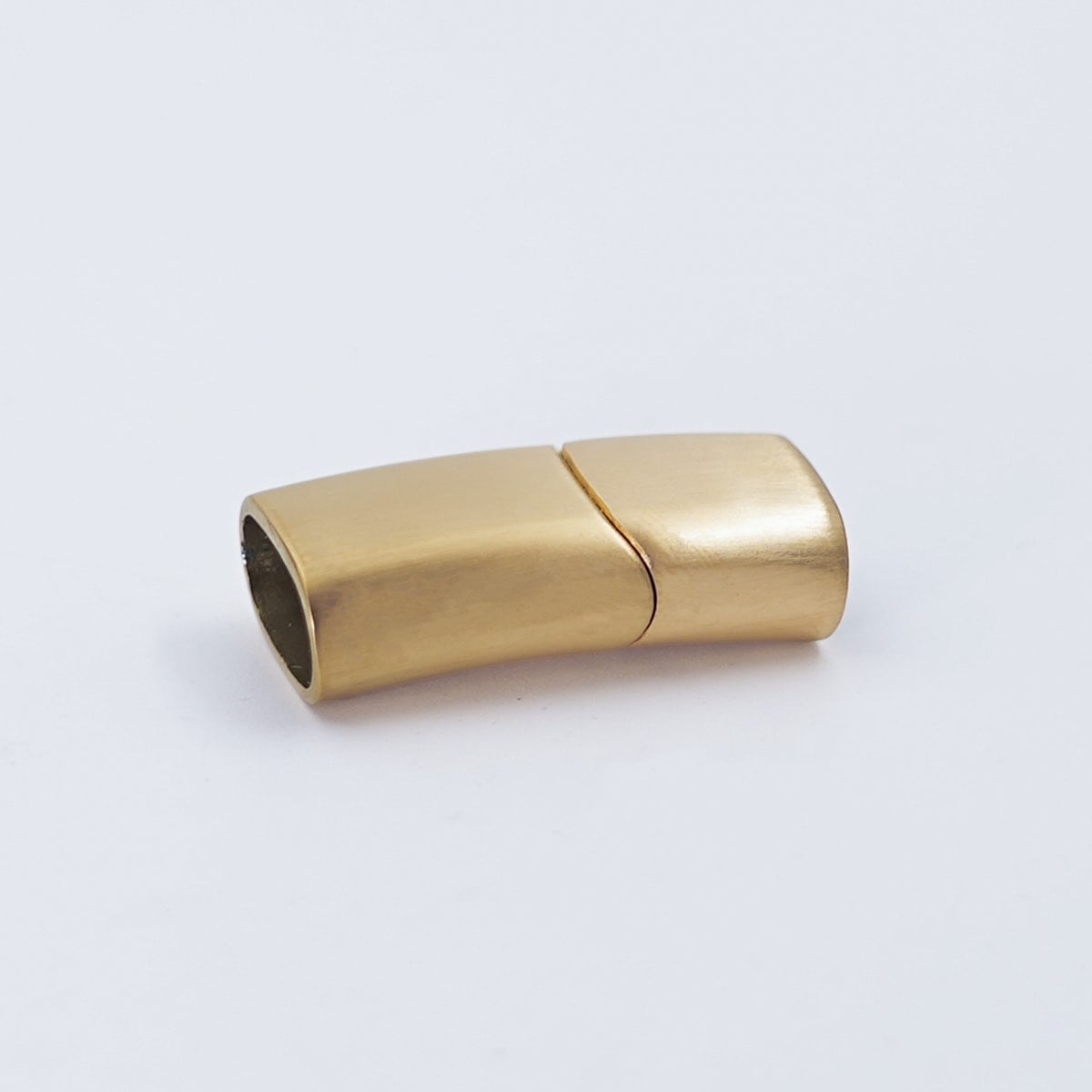
그리고 handshake magnetic bracelet clasp is a useful example of why those details should come from the selected model, not from a generic size list. The published page describes a zinc-alloy clasp in the form of two interlocking hands, each containing a hidden magnet. It gives approximate dimensions of around 32 × 7 × 12 mm, about 5 g per piece, with a 2 mm hole, and notes that dimensions can be adjusted to fit a specific bracelet design. Those figures are published as approximations. They should be confirmed for the order, and they do not mean that every jewelry clasp in the catalogue uses a 2 mm hole.
Treat retention, opening force and the cord connection as separate checks
The resource hub is explicit on this point. Magnet retention, clasp opening force and the cord connection are separate checks. Fixing may use bonding, press fitting or encapsulation, depending on the style. The finished sample should be evaluated, rather than selected from pull force alone.
In practice, that means a sample programme should say what each check is for:
- Magnet retention asks whether the magnet stays in the clasp body under the intended use, not only whether the two halves attract.
- Opening force asks how the clasp feels when it is connected and released, in the intended orientation and with the actual jewelry length and weight in mind.
- The cord or chain connection asks whether that joint — however it is made — remains secure without damaging the clasp or the material.
A single pull reading cannot answer all three questions. Sample pull readings apply to their tested setup. If a figure is discussed, the conditions and acceptance criteria should be agreed for the order, rather than copied from another style or from a loose clasp with no cord attached.
Confirm finish and request relevant evidence for this model
The hub asks teams to confirm finish appearance and to request available nickel-release evidence for the selected model and treatment. That wording is careful, and it should be followed. A finish approved on a different clasp, or a report from another treatment, does not automatically apply to the model in the brief.
The handshake clasp page lists standard finishes including gunmetal, gold, rose gold, silver, red and rainbow, with further customisation available. Logo marking can be discussed through laser engraving or custom mould design, and packaging can range from simple poly bags to branded gift boxes. Those options belong in the sample brief if they are required, but a colour name is not a complete finish standard. Approve the appearance on the selected model and treatment.
The wider 주얼리용 자석 여닫이 category describes clasps for bracelets, necklaces and other jewelry, available in a range of colours, sizes and shapes, with electroplated finishes and neodymium magnets. Use the category to compare styles, then bring the selected model back to the fit, assembly and evidence checks above.
What to include in a production-sample brief
The resource hub asks for the application, dimensions or drawing, assembly materials, finish requirements, sample quantity and target timing, plus photographs or a physical reference where available. For a production-intent sample, it is worth making that list slightly more explicit:
- Identify the article: bracelet, necklace or another jewelry type, and how the piece will be worn.
- State the actual cord, chain or strand profile, including diameter or reference sample, not only a nominal clasp size.
- Describe the intended connection method, whether bonding, press fitting, encapsulation or another route that suits the selected style.
- Quote the current clasp dimensions and opening from the selected product page or drawing, and mark any adjustment that must be reviewed.
- Separate the sample checks: magnet retention, opening force, and the cord or chain connection.
- Agree how opening or pull will be assessed, including the setup and acceptance criteria for this order.
- Confirm the finish standard and ask for available nickel-release evidence that relates to the selected model and treatment.
- Include logo, shape or locking-style requests only with a reference sample or drawing.
- State the sample quantity, target timing, and whether the sample is for design review or for production release.
Discuss locking styles, logo marking, shapes and finish colours using a reference sample or drawing, then confirm the configuration, quantity and delivery requirements with the factory. Do not treat a catalogue range as proof that every combination exists.
The aim of this brief is not to freeze every commercial detail before anyone has seen a sample. It is to stop a production sample being built on an assumed opening, an assumed pull figure, or a finish standard that belongs to a different model.
Richarms is a magnetic snaps manufacturer and custom bag hardware factory founded in Foshan, China, in 2003.

 Korean
 English
 French
 Italian
 Portuguese
 Spanish
 Turkish
 Japanese
 German
 Dutch