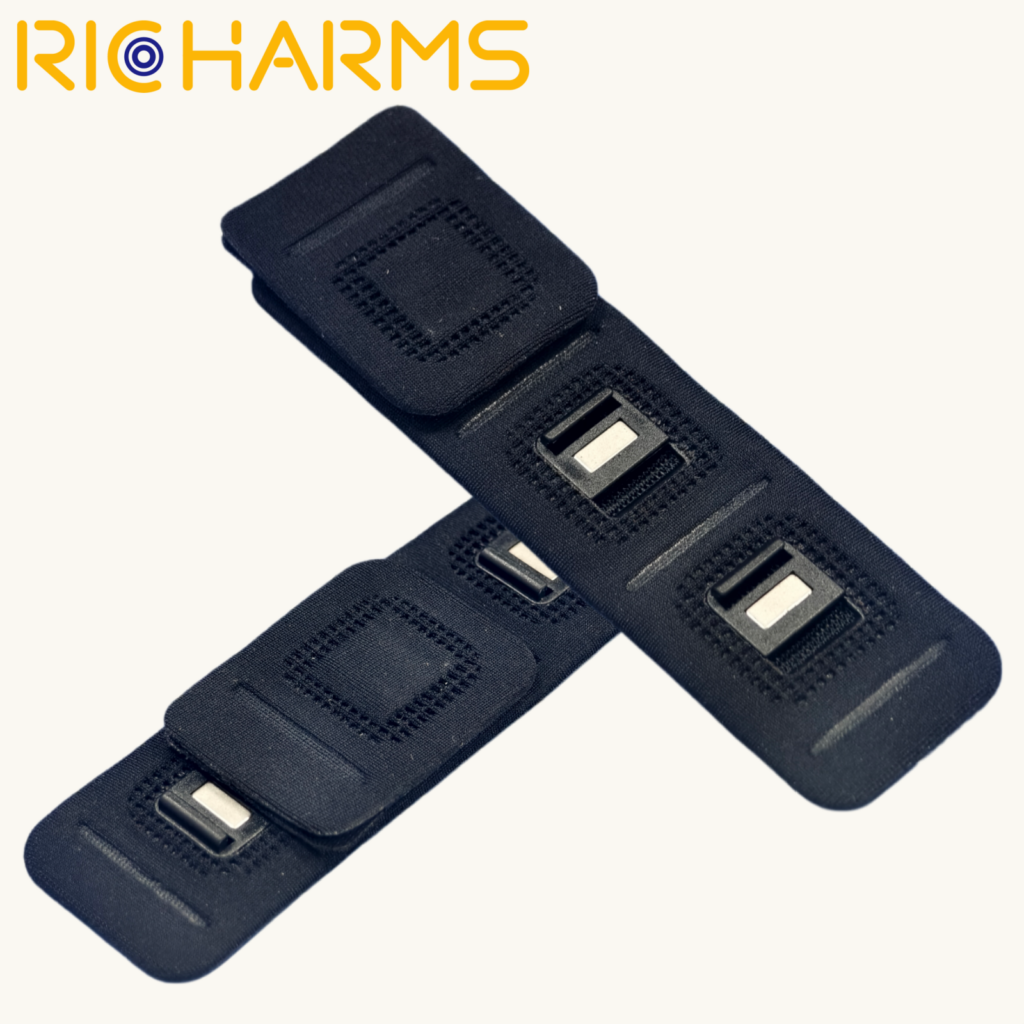
Magnetic bra technology uses attraction to help mating components align; some designs also use mechanical features to retain the closure under garment tension. Some designs also include a mechanical feature that resists separation once closed. Understanding the difference between alignment and retention helps a garment brand choose and test the right clasp.
Ontdek de Richarms bra closure category for component structures, then assess them in the complete garment.
Understanding magnetic bra technology
As compatible magnetic faces approach, attraction can help guide them toward contact. The resulting closing behavior depends on the magnet arrangement, housing, gap and orientation. Fabric or padding between the faces changes the assembly being tested.
The strongest loose magnet is not necessarily the best clasp. A closure also needs a usable release action and attachment that will not pull out of the fabric. The magnetic clip selection guide starts with these garment requirements.
Retention depends on load direction
A clasp may resist a straight pull differently from a sideways slide or peeling action. Stretch in the band can change the direction and distribution of force. Compare samples under the movements the wearer is expected to make, rather than relying on a single hand-held pull demonstration.
In a magnetic-mechanical design, a hook, channel or other feature may carry part of the load. Ask the supplier how that specific mechanism engages and releases. Do not assume that all magnetic bra clips include a lock.
The fabric attachment is part of the system
The hardware needs enough support to keep it in position. Fabric stretch, seam placement and reinforcement affect whether the clasp sits flat or pulls at an angle. A rigid component attached to a soft panel can also create pressure or wear points.
Prototype the complete construction before deciding the component is suitable. Check alignment, grip, release and retention after repeated use and the intended care cycle. Keep a record of the sample configuration so later results remain comparable.
Accessibility needs testing with users
Magnetic guidance may reduce the need to line up tiny hooks, but it does not guarantee one-handed use or comfortable opening. The user must still grip, position and release the closure. Different people may prefer different actions.
De clips versus hooks guide compares these operations. For designs aimed at older wearers, review five potential benefits for seniors alongside the limitations.
Safety and material questions
Magnets must remain securely contained, and the garment needs suitable medical-device precautions. See our magnetic bra closure safety guide. Housing material and finish names do not establish skin compatibility or wash durability on their own; ask for documentation and tests relevant to the proposed specification.
For development, define dimensions, mounting method, opening action, care conditions and acceptance criteria before requesting production. Watch Richarms on YouTube for product context, review the bra hardware store categoryof send a sample brief to discuss a component.


 Dutch
 English
 French
 Italian
 Portuguese
 Spanish
 Turkish
 Korean
 Japanese
 German