Easy clasp bras for arthritis should be assessed around the movements the individual finds difficult, including reaching, gripping, aligning and releasing the closure. Front positioning, larger gripping surfaces and a manageable release action may help, but a magnetic closure is not automatically the best choice for every person. The fit and support of the whole bra still matter.
This guide separates consumer selection questions from the component decisions made by apparel brands. Richarms supplies magnetic bra closure hardware, rather than diagnosing or treating arthritis.
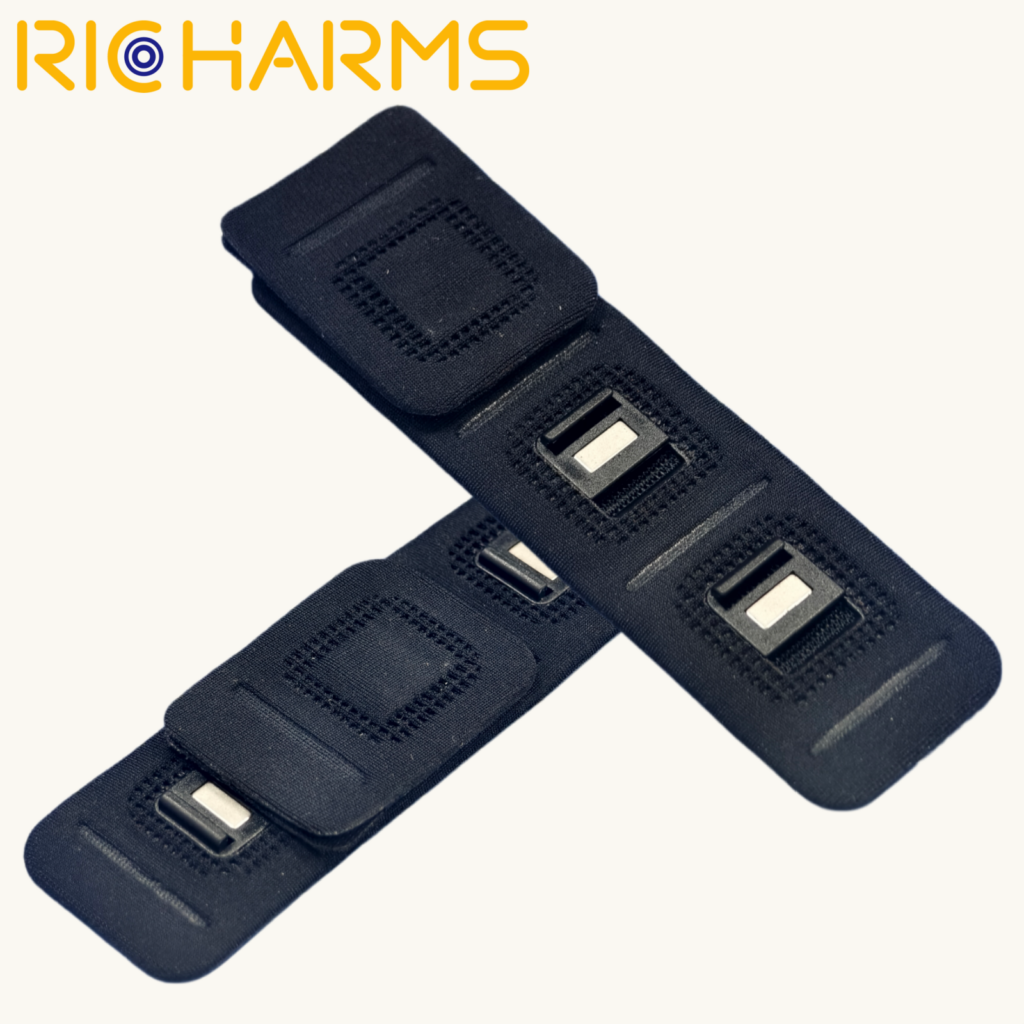
Comparing easy clasp bras for arthritis
Consider whether the main difficulty is reaching behind the back, pinching a small hook, holding fabric under tension or separating a firm clasp. Different closure designs address different tasks. The useful comparison is the wearer's actual fastening sequence, not a general claim that one fastening is easiest.
An occupational therapist can help assess dressing difficulties and suitable approaches. Avoid forcing painful movements just to make a particular garment work.
Compare front fastening options
Magnetic-assisted closures can help bring mating parts into position. Front hooks, nonmagnetic clips and zippers provide other opening actions. Pull-on garments avoid a clasp but introduce a different dressing movement, which may or may not be comfortable.
Use our magnetic clips versus hooks comparison to understand the actions involved. Check the exact product's grip area and release method; some magnetic-assisted designs also have a mechanical locking feature.
Trial the garment as a whole
Try the closure in the position in which it will be worn, where a suitable fitting or return arrangement allows. Check whether the person can grasp it without repeated attempts and whether it stays aligned during ordinary movement.
- Is there a clear place to grip without pinching skin?
- Can the clasp be released without excessive force?
- Does the band stay comfortable when the closure is fastened?
- Are straps and adjustments accessible?
- Does the wearer understand how to open it if assistance is needed?
Do not choose an overly tight garment just to improve retention. A clasp cannot compensate for an unsuitable size or support structure.
Check medical devices and care requirements
People using magnet-sensitive implanted or wearable devices should obtain device-specific guidance before using magnetic apparel. Read our magnetic bra closure safety guide; if compatibility is unclear, compare nonmagnetic options.
Follow the garment's care label and inspect the clasp after washing. Stop using it if the enclosure or fixing is damaged. A care instruction for one design should not be copied to every magnetic bra.
For brands developing an accessible clasp
Include intended-user testing in the sample process. Record opening effort, grip requirements and retention in the actual band construction. The benefits and limits for seniors provides related considerations, while the magnetic clip selection guide supports a component specification.
See Richarms on Instagram for product imagery. Contact Richarms with a drawing, fabric stack and intended fastening action to discuss hardware samples. Claims about pain relief or medical suitability need evidence beyond the clasp design.
Related Reading

 English
 French
 Italian
 Portuguese
 Spanish
 Turkish
 Korean
 Japanese
 German
 Dutch